Table of Contents
ToggleA sleeper sofa solves the eternal guest-room dilemma: comfort during the day, a functional bed at night. West Elm has built a reputation for thoughtful design and durability, making their sleeper sofas a popular choice for homeowners balancing style with practicality. Whether updating a studio apartment or furnishing a multi-purpose space, a West Elm sleeper sofa delivers on both fronts, no ugly fold-out frame or lumpy mattress required. This guide walks through what makes West Elm’s sleeper sofas worth considering, which collections match different spaces, and what to inspect before clicking “add to cart.”
Key Takeaways
- West Elm sleeper sofas prioritize quality construction with kiln-dried hardwood frames and memory foam or spring-core mattresses, making them a durable mid-premium choice that resists warping and delivers genuine sleeping comfort.
- Popular models like the Henry, Slope, and Tillary sleepers feature mid-century modern and contemporary design, with the Henry Petite offering compact 72-inch dimensions ideal for apartments and studios.
- Consider mattress type (memory foam for comfort, spring-core for firmness), frame closure (manual vs. electronic push-button), and fabric choice (performance fabrics resist stains but cost $200–$400 more than standard upholstery).
- A West Elm sleeper sofa typically costs $1,200–$2,500+ before customization, with seasonal sales offering 10–20% discounts and white-glove delivery available for $150–$300 to handle stairs and tight spaces.
- Proper maintenance—rotating the mattress every few months, spot-cleaning based on fabric type, and keeping the pullout mechanism clean—ensures your sleeper sofa remains functional for 7–10 years.
Why Choose A West Elm Sleeper Sofa
West Elm sleeper sofas stand out because they don’t treat the bed function as an afterthought. Most furniture retailers bolt a flimsy mattress into a frame that screams “guest accommodation”, not a place you’d actually want to sleep. West Elm’s approach feels different: the sleeping surface gets the same design rigor as the seating.
The brand sources quality upholstery fabrics and uses memory foam or spring-core mattresses that don’t feel like you’re sleeping on plywood. Their frame construction uses kiln-dried hardwood, which resists warping and creaking, critical for a piece that converts daily. You’re also getting a design aesthetic that works in modern, transitional, or contemporary spaces without looking like dorm-room furniture.
Pricing sits in the mid-to-premium range. You’ll pay more than a big-box store sectional, but less than a full custom sofa from a local builder. For someone who values long-term durability and won’t be replacing the piece in five years, that calculation often makes sense. West Elm also runs sales and offers financing options, which helps spread the cost.
Popular West Elm Sleeper Sofa Collections
Mid-Century Modern & Contemporary Styles
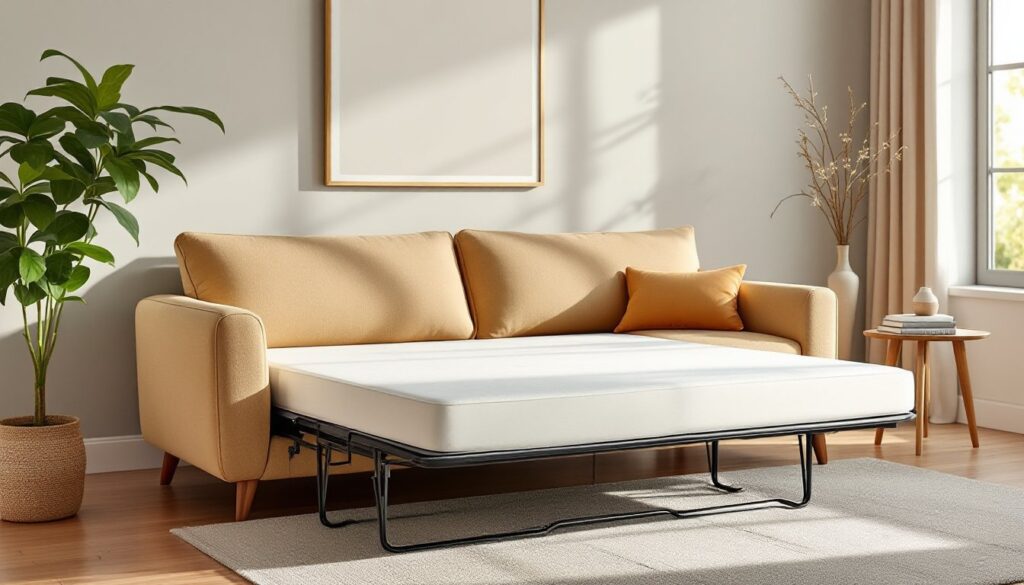
West Elm’s sleeper sofas anchor themselves in mid-century modern design language, tapered wooden legs, clean lines, and unfussy upholstery. The Henry Sleeper Sofa is their flagship: a compact profile with a smooth mattress pullout, available in dozens of fabric options and colors. It reads as a normal sofa but sleeps two comfortably.
The Slope Sleeper pushes the contemporary angle, with angled armrests and a lower-profile frame. If the room has minimalist leanings, this one fits the bill. Tillary Sleeper offers a slightly roomier footprint and works in larger living areas where you’re not sacrificing seating for sleeping capacity.
All three come in Performance Fabrics (pet-and-stain-resistant options) alongside natural linen, cotton blends, and leather. The fabric choice affects both cost and maintenance, something to consider if kids, pets, or late-night spills are part of the picture.
Compact & Space-Saving Options
For apartments or studios, space-efficiency matters more than impressing visitors. The Henry Petite compresses the classic Henry into a tighter footprint, roughly 72 inches wide instead of the standard 80 inches. It still pulls into a full-size bed frame without requiring three grown adults to extract the mattress.
West Elm also offers sectional sleepers, which give L-shaped seating plus a bed. The Tillary Sleeper Sectional is popular here. Yes, it takes up more floor space, but in an open-plan layout, the extra seating often justifies it. Measure your doorways and hallways first, sectionals are notorious for not fitting through standard doors during delivery. West Elm’s delivery team will attempt the install, but if the piece doesn’t fit, you’ll be paying for a return or a custom disassembly option (which can get pricey).
Key Features To Compare
The mattress type makes or breaks the experience. Memory foam mattresses feel softer and conform to your body, good for side sleepers and people with back sensitivity. Spring-core or hybrid mattresses feel firmer and provide better support if you spend eight hours on the bed. West Elm doesn’t publish exact firmness ratings, so check their detailed product pages or visit a showroom to test.
Frame closure matters too. Some sleeper sofas have a manual pull-out mechanism (you grab the frame edge and tug, requires some arm strength). Others use electronic push-button openers that lift the mattress hydraulically. The button costs extra but saves your back if guests are pulling the bed out twice a week.
Arm depth, leg style, and seat height all affect how the piece works in your space. Measure your ceiling height if the arms are tall: rolled arms take up more visual space than track arms. If anyone in the household has mobility issues, a higher seat (around 18–20 inches) makes sitting and standing easier. Standard West Elm sofas sit around 17–18 inches, which is typical but worth confirming.
Fabric performance grades matter if durability is a concern. Performance fabrics cost $200–$400 more but resist staining and fading, standard upholstery requires more frequent care. Natural linen looks beautiful but shows wrinkles and creasing, and isn’t ideal if durability is the priority.
Pricing, Shipping & Customization Options
A West Elm sleeper sofa typically ranges from $1,200 for a Petite model to $2,500+ for a sectional with premium fabric. That’s the base price before customization. Switching from a standard fabric to a performance or designer option adds $300–$600. Leather upgrades push the total even higher.
West Elm runs seasonal sales, usually 10–20% off during holiday weekends and end-of-season clearance. Sign up for their mailing list: they also offer exclusive discounts to email subscribers. First-time buyers sometimes catch a 15% welcome offer.
Shipping is included for orders over a certain threshold (typically around $500), but white-glove delivery, where the team unpacks, assembles, and positions the sofa, costs extra, usually $150–$300 depending on your zip code. Standard shipping means the piece arrives on a freight truck, and you’re responsible for moving it into the room. If stairs or tight hallways are involved, white-glove is worth the cost.
Customization options are extensive. You can mix-and-match leg finishes (walnut, black, or brass), choose from 100+ fabrics, and select arm styles. Lead times for custom orders run 6–8 weeks. If you need the sofa faster, buy from in-stock options, West Elm maintains a rotating selection of popular configurations available for faster delivery.
Care, Maintenance & Durability
West Elm sofas are built to last 7–10 years with normal use, assuming proper care. The kiln-dried hardwood frame resists warping, and the joinery is solid, so the structure won’t feel loose after a year of nightly sleeper conversions.
Upholstery care depends on fabric type. Performance fabrics can be spot-cleaned with a damp cloth and mild soap, spills wipe away quickly. Natural linen and cotton require more attention: they’re prone to staining and need regular vacuuming to prevent dust accumulation. Leather requires conditioner every 12–18 months to prevent drying and cracking.
The mattress needs rotating every few months to distribute wear evenly. Mark your calendar: most sleeper sofa owners forget this step and end up with a permanently dipped center within a few years. When you do rotate, vacuum underneath the seating platform, dust collects there and affects the mechanism over time.
If the mattress degrades (usually after 5–7 years of regular sleep), it can often be replaced without replacing the entire sofa. West Elm sells replacement mattresses for their sleeper models, ranging from $400–$800 depending on the size and type. This modularity is a genuine advantage versus sofas where the mattress is glued or permanently attached.
The pullout mechanism itself is the most wear-prone component. Heavy use, pulling the bed out daily, stresses the hinges and slides. If the mechanism becomes sluggish or jammed, a furniture repair professional can service it, though costs vary. Prevention is simpler: use the mechanism smoothly, don’t yank hard, and keep the slides clean and dust-free.
<h2 id="” data-id=””>Final Thoughts
A West Elm sleeper sofa is a practical, well-designed middle ground for anyone needing flexible living space. The construction quality justifies the mid-premium price, and the design won’t look dated in three years. Focus on mattress feel, frame closure type, and fabric durability when deciding which model fits your household. If possible, test one in a showroom before ordering, sleeping comfort is personal, and mail-order returns on a 2,000-pound sofa are a hassle. With proper maintenance, your West Elm sleeper sofa will serve guest rooms and multipurpose spaces reliably for a decade.