Table of Contents
ToggleCarpet cleaning doesn’t have to leave your home damp and smelling like a wet gym for days. Dry carpet cleaners offer a refreshing alternative to traditional steam cleaning methods, tackling stubborn stains and odors in a fraction of the time. Whether dealing with high-traffic areas, pet messes, or just refreshing a room before guests arrive, understanding how dry carpet cleaning works can help homeowners make smarter choices. The technology behind these systems has improved dramatically over the past decade, making them practical for DIY enthusiasts and equally effective as professional services in many situations.
Key Takeaways
- Dry carpet cleaners remove dirt and stains using minimal water, leaving carpets dry and walkable within 30 minutes to an hour, compared to 12–24 hours for traditional steam cleaning.
- Two main dry carpet cleaning methods exist: powder-based systems (affordable and simple) and encapsulation machines (more effective for stubborn stains), each offering distinct advantages depending on your cleaning needs.
- Dry carpet cleaning prevents moisture-related problems like mold and mildew by using under 5 gallons of water per job, making it safer for delicate fibers like wool and vintage rugs.
- A dry carpet cleaner is ideal for routine maintenance, light-to-moderate stains, and high-traffic areas, though deep set-in stains and pet accidents may still require steam extraction.
- Professional dry cleaning costs $100–200 per room, while DIY powder applications range from $10–30, offering cost savings compared to steam cleaning’s $150–300 per room price tag.
What Is a Dry Carpet Cleaner?
A dry carpet cleaner is a machine or product system designed to remove dirt, dust, and stains from carpet fibers without relying on large amounts of water. Unlike traditional steam cleaners (also called hot water extraction machines), dry cleaners use minimal moisture, typically just enough to activate cleaning agents, then extract or brush away the residue along with the dirt.
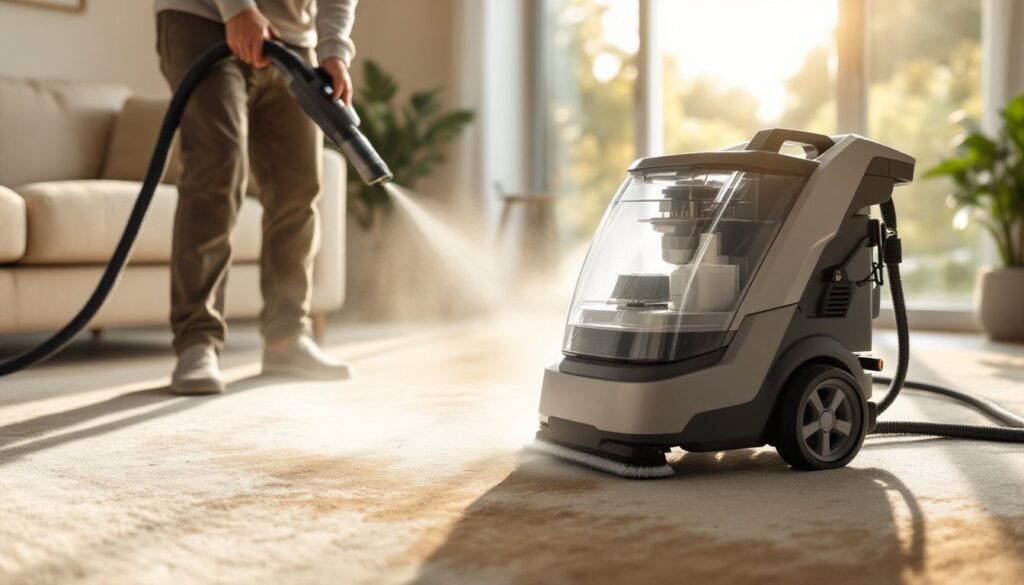
Dry carpet cleaners come in two main forms: powder-based systems you apply and then vacuum, or specialized machines that spray a cleaning solution and immediately extract it. Some homeowners use both methods in rotation. The key advantage is speed: your carpet is typically dry and ready to walk on within 30 minutes to an hour, compared to the 12–24 hours often needed after steam cleaning. This makes dry cleaning ideal for busy households or commercial spaces where downtime isn’t an option.
How Dry Carpet Cleaning Works
Dry carpet cleaning uses fundamentally different chemistry than steam cleaning. Instead of dissolving dirt in hot water, dry methods break down soils and suspend them for easy removal. Understanding the two primary techniques helps you choose the right approach for your situation.
The Powder and Extraction Method
Powder-based dry cleaners are among the simplest systems to use. You sprinkle a specially formulated powder (often containing plant-based enzymes or other soil-lifting agents) across the carpet, work it in with a brush or mechanical applicator, let it sit for a set time, usually 10–20 minutes, then vacuum thoroughly. Quality powders contain compounds that encapsulate dirt particles, making them cling to the powder rather than the carpet fiber.
When shopping for powders, check the ingredient list. Baking soda-based products are affordable but often less effective than enzyme-based formulas. Products like Capture Carpet Cleaner use encapsulation chemistry specifically designed to release soil during vacuuming. The advantage here is affordability and minimal equipment investment: you’re essentially using your regular vacuum. The downside is that powders work best on surface-level soiling and light stains, heavy traffic lanes or set-in marks may require a more aggressive approach.
The Encapsulation Technique
Encapsulation machines spray a cleaning solution that forms polymer crystals around dirt particles as it dries. These crystals shrink and break apart during vacuuming, pulling the encapsulated soil away from fibers. It’s the technology behind many commercial dry-cleaning systems and some mid-range consumer machines.
These machines typically have two tanks: one for the cleaning solution and one for recovered wastewater (if the machine includes extraction). High-quality encapsulation solutions contain surfactants that penetrate fibers and lift embedded dirt. The polymer crystals dry quickly, sometimes within 15–30 minutes, making this method faster than steam cleaning but slightly slower than powder methods. Machines range from compact, handheld spot cleaners to larger upright systems that can handle whole rooms. A rental-grade encapsulation machine runs $40–80 per day from most equipment rental shops, making it cost-effective for quarterly deep cleaning.
Benefits of Dry Carpet Cleaning
Dry carpet cleaning addresses pain points that plague traditional steam cleaning. First and foremost is speed. Most dry methods leave carpet damp at worst, walk-on-dry at best, compared to the overnight wait time steam cleaning demands. For households with kids, pets, or frequent company, this is genuinely life-changing.
Moisture-related issues disappear with dry cleaning. Excess water can seep into carpet padding and subfloors, creating mold and mildew problems that show up weeks later. High-humidity climates particularly benefit: steam cleaning in summer can trap moisture and lead to musty smells. Dry methods eliminate this risk almost entirely.
Another major win is gentle handling of delicate fibers. Wool, sisal, and vintage rugs can shrink or felt under the heat and moisture of steam cleaning. Dry methods are safer for these materials, making them the professional choice for fine rugs. Even standard carpet fiber benefits, without the pounding action of extraction, fibers maintain their nap and resist matting in high-traffic zones.
Cost is competitive too. A DIY powder application costs $10–30 per room: a machine rental runs $50–100 for a day. Professional dry cleaning typically runs $100–200 per room, compared to $150–300 for steam cleaning in many markets. Frequency matters here: dry cleaning’s speed and lower moisture risk make quarterly touch-ups more practical, often keeping carpets looking fresher year-round than one annual steam cleaning.
Finally, dry cleaners use less water, making them an eco-conscious choice. A single steam cleaning job uses 20–50 gallons of water: dry methods use under 5 gallons. For homeowners focused on sustainability, this difference stacks up across seasons.
When to Use a Dry Carpet Cleaner
Dry carpet cleaning shines in specific situations, though it’s not a cure-all. Use dry methods for regular maintenance and light-to-moderate staining. High-traffic hallways, family room carpets, and pet-prone zones respond excellently to quarterly dry cleaning. These areas accumulate dust and dry soils faster than they accumulate wet messes, making them ideal for powder or encapsulation work.
Spot cleaning is another prime use case. Got a wine spill or muddy paw prints? A spot-cleaning encapsulation machine or targeted powder application handles these in 20 minutes, whereas scheduling a steam cleaning service takes days. For renters dealing with “normal wear” stains before moving out, dry cleaning is faster and cheaper than professional intervention.
Don’t rely solely on dry cleaning for heavy, set-in stains or significant pet accidents. When carpet has absorbed liquids deeply, think old coffee spills or the lingering result of a housebroken mishap, steam extraction’s water-and-suction combo lifts out moisture and dissolved soils more thoroughly. Dry methods can reduce the stain’s visibility, but full removal often requires steam’s deeper penetration.
Also consider carpet fiber type and condition. Wool, silk, and handmade rugs always favor dry cleaning or professional hand cleaning. Polypropylene and nylon commercial carpets tolerate both methods well, though repeated dry cleaning is gentler. If your carpet has backing issues or visible tears, any aggressive cleaning method risks worsening the damage: in these cases, spot treat gently or consider replacement.
Climate matters too. In dry regions, dry cleaning is efficient and practical. In humid climates, steam cleaning’s complete moisture extraction might serve you better for deep cleaning, though dry methods remain excellent for maintenance between steam sessions. Time constraints are real, if your carpet needs to be ready for an event in a few hours, dry cleaning is your only option.
Conclusion
Dry carpet cleaners are a practical, underrated tool for maintaining carpet between professional cleanings or handling the job yourself. Whether you choose a powder-based system or rent an encapsulation machine, you’re looking at faster drying times, less water damage risk, and comparable cleaning power to steam extraction for most household soils. The key is matching the method to your carpet type, soil level, and timeline. Start with dry cleaning for routine maintenance: bring in steam cleaning when deep stains demand it. Your carpet, and your schedule, will thank you.