Table of Contents
ToggleUrban living and compact home designs have made small kitchen sinks increasingly essential. More homeowners are discovering that downsizing the sink doesn’t mean compromising on practicality or style. Whether renovating a galley kitchen, updating a condo, or designing a tiny home, a small kitchen sink delivers the functionality needed without dominating the workspace. Modern materials and smart mounting options have evolved dramatically, making compact sinks viable solutions rather than reluctant compromises. Understanding dimensions, materials, and installation methods helps homeowners choose the right sink that fits both their space and their cooking habits.
Key Takeaways
- Small kitchen sinks have become a pragmatic design choice that frees up counter space while reducing water usage and aligning with minimalist home design philosophies.
- Standard small kitchen sink dimensions range from 18–24 inches wide with 7–8 inch depths, fitting easily into compact spaces without requiring cabinet modifications.
- Stainless steel, ceramic, and granite composite are the top materials for small kitchen sinks, each offering distinct advantages in durability, maintenance, and aesthetic appeal to match different household needs.
- Undermount installation creates a seamless modern look for small kitchen sinks, while top-mount sinks offer simpler, more affordable installation ideal for rentals and quick renovations.
- Pairing a small kitchen sink with a high-arc pull-down faucet and optimizing under-cabinet storage maximizes functionality and workflow in tight kitchen spaces.
Why Small Kitchen Sinks Are Becoming More Popular
Small kitchen sinks have transitioned from temporary fixes to thoughtful design choices. Space constraints in modern homes, especially urban apartments and starter properties, have driven innovation in compact sink design. A smaller sink footprint frees up valuable counter real estate for prep work, appliances, and storage, which many cooks value more than a sprawling basin.
Secondly, the trend aligns with minimalist and sustainable living philosophies. Smaller sinks reduce water usage and resource demand during manufacturing. Homeowners are increasingly willing to optimize their kitchens for daily function rather than aspirational design, and a well-chosen small kitchen sink supports that pragmatic approach.
Third-party kitchen surveys from 2025-2026 show that under 60% of renovating homeowners now prioritize large double-bowl sinks: compact single-bowl and shallow options have gained 25% more interest year-over-year. This shift reflects genuine changes in how people use their kitchens, especially in homes with dishwashers that reduce handwashing demand.
Key Dimensions and Size Options for Compact Kitchens
Understanding standard dimensions helps homeowners assess fit and functionality realistically. Small kitchen sinks typically fall into the 18–24 inches wide range, compared to standard 30–36 inch doubles. Depth matters too: compact sinks usually sit 7–8 inches deep, slightly shallower than traditional models, which reduces splashing and makes childproofing easier.
A single-bowl small kitchen sink (18-22 inches) suits tight spaces and minimal prep work. These fit standard 24-inch base cabinet openings without modification. If undersized measurements concern homeowners, they’re typically specified as follows: internal bowl length (actual usable space), width, and depth, not the exterior edge-to-edge footprint.
For those needing dual functionality, shallow rectangular two-basin layouts exist in 24-28 inch spans, though one basin is inevitably narrower. Measure the cabinet opening, account for faucet clearance (typically 6-8 inches from the backsplash), and confirm drain line access before ordering. A 3-4 inch variance between sink exterior width and cabinet opening is standard for mounting hardware.
Material Choices for Durability and Style
Stainless Steel vs. Ceramic and Granite Composite
Stainless steel remains the workhorse material for small kitchen sinks. 16-18 gauge steel (thicker is better, 18 gauge = ~1.2mm) resists dents and rust when properly maintained. Brushed finishes hide water spots better than polished: a quality stainless steel sink under 24 inches typically costs $150–$350. The trade-off: fingerprints and mineral deposits show readily, requiring regular polishing or microfiber wiping for a pristine look.
Ceramic and porcelain sinks offer timeless charm and excellent stain resistance. They’re lighter than stainless and less prone to noise during use. But, they chip more easily, dropping a skillet into a ceramic basin can crack the glaze. These sit in the $200–$500 range for compact sizes and demand gentler handling. Ceramic is ideal for low-traffic kitchens or households with careful users.
Granite composite sinks (crushed granite bound with resin) have surged in popularity. They’re extremely durable, don’t stain, and absorb noise better than stainless or ceramic. Color options range widely, blacks, grays, and earth tones suit modern and traditional kitchens alike. Costs run $300–$600 for small models, but longevity often justifies the premium. Avoid abrasive scrubbers: gentle cleaning extends life significantly.
For small kitchen sinks where every inch counts, material choice affects not just aesthetics but heat conduction, noise isolation, and maintenance demands. Match material to household habits and budget constraints.
Installation Considerations and Mounting Styles
Top-Mount and Undermount Options
Top-mount (drop-in) sinks sit on the countertop lip: the rim rests on the surface, creating a waterproofing lip. This is the simpler installation, sink sits in a routed opening, clips secure it underneath, and a bead of silicone seals the rim. For small kitchen sinks in rental situations or quick renovations, top-mount is ideal. Water spills flow back into the basin, not the counter edges. Cost advantage: most affordable integration method, no specialized skills required. Downside: the rim is slightly prominent and gathers debris.
Undermount sinks are mounted beneath the countertop, creating a seamless, modern appearance. The sink secures via clips or brackets underneath: the counter surface overhangs, directing spills into the basin. Undermount looks sleek and simplifies counter cleaning, no rim to work around. Installation requires routing a support ledge or using specialized fasteners. This method demands either professional work or confident DIY skills: mistakes here affect water management and structural support.
Countertop material influences choice. Laminate counters work best with top-mount: undermount stresses laminate edges. Granite, quartz, and solid surface counters handle undermount well and look polished. For small kitchen sinks, the mounting style affects workflow and visual impact more than on larger basins. Homeowners should confirm what their counter material supports and whether their cabinet has adequate bracing underneath before committing.
How to Maximize Functionality in Limited Space
Small kitchen sinks demand smart planning to avoid feeling cramped. First, choose a single-bowl layout if possible: it provides uninterrupted working surface and easier movement. Avoid decorative or unusual shapes (ovals, angles) in compact sizes, they reduce usable volume even though looking spacious in marketing photos.
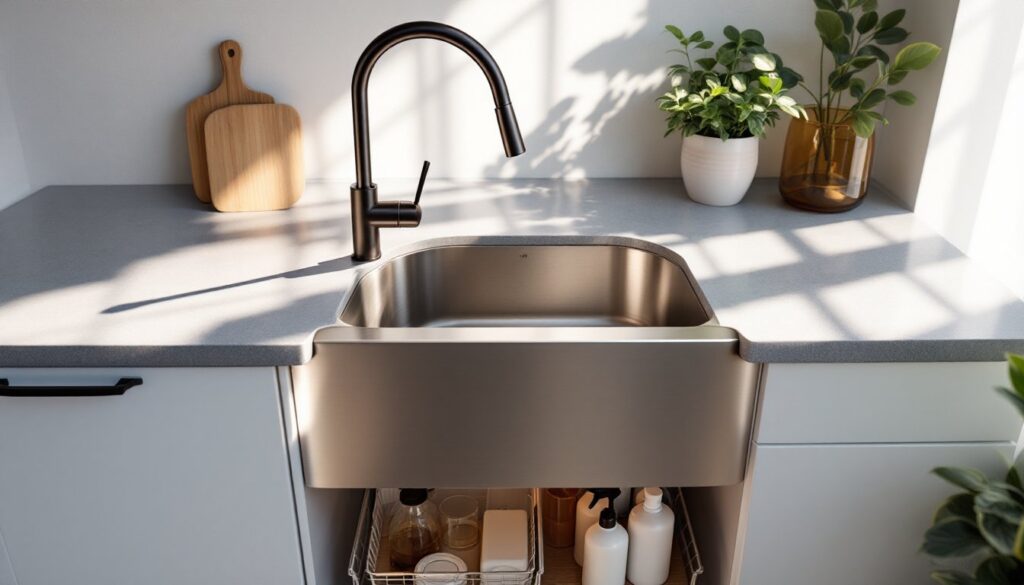
Second, pair the sink with a pull-down or pull-out faucet. Gooseneck or arc-spout designs let users reach corners and edges easily, extending reach without increasing sink footprint. High-arc faucets (8+ inches clearance) fit better over small basins than traditional spreads.
Third, optimize under-cabinet storage. Small sinks expose plumbing and open shelving opportunities. Mount open shelving or narrow pull-out organizers for frequently used items (soap, sponges, towels). This compensation strategy turns a space constraint into organized accessibility.
Fourth, consider shallow-depth layouts (6-7 inches internal) if handwashing and light prep dominate use. Shallower basins accommodate everyday tasks without the bulk of 8-9 inch industrial designs. For households with dishwashers, shallow depth is practical and reduces water heating demands.
Finally, ensure the drain line clearance beneath the sink. In 24-inch base cabinets, plumbing sits tight. Request a sink with rear or side drain placement to free up space for a garbage disposal or under-sink organization.
Small kitchen sinks succeed when design complements actual use patterns, not aspirational cooking scenarios.