Table of Contents
ToggleA double island kitchen is no longer just a luxury feature reserved for sprawling estates. Today’s homeowners are discovering that a kitchen with double islands delivers real, practical benefits, more counter space, flexible workflow, and room for multiple cooks to work without colliding. This trend is gaining serious traction in 2026, especially as people spend more time cooking and entertaining at home. Whether someone’s renovating a large kitchen or reimagining their cooking layout, understanding the fundamentals of dual islands helps make informed design choices. This guide walks through what makes a double island kitchen work, the advantages it brings, layout rules that prevent costly mistakes, and practical solutions for maximizing functionality.
Key Takeaways
- A double island kitchen provides two independent work surfaces that reduce traffic bottlenecks and enable multiple cooks to work simultaneously without collision.
- Maintain 6 to 8 feet between island centerlines and at least 3 to 4 feet of walking space around each island to ensure functional workflow and easy movement.
- Each island should measure a minimum of 2 feet by 4 feet, though 4 feet by 6 feet offers better prep space and comfort for two people working back-to-back.
- Plan electrical outlets, plumbing rough-ins, and ventilation ductwork during the design phase to avoid costly mid-project changes and meet building code requirements like GFCI protection.
- Maximize storage by dedicating each island’s design to its specific function—deep drawers for prep work on one, beverage coolers or seating on the other—rather than treating them as identical units.
- The double island kitchen trend adds premium resale appeal while transforming your kitchen into a social hub where family and guests can gather and interact with the cook.
What Is A Double Island Kitchen?
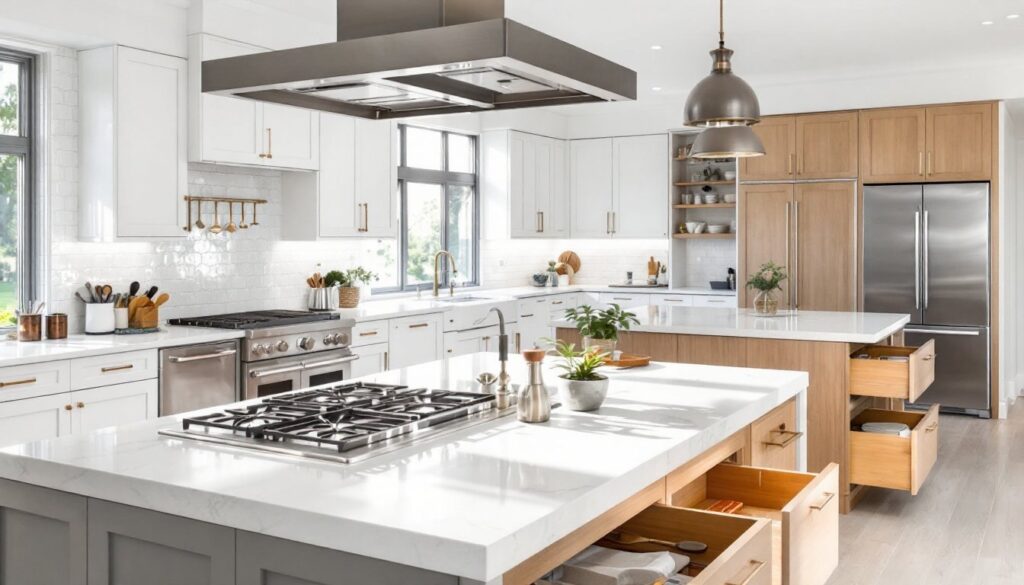
A double island kitchen features two separate, freestanding work surfaces positioned within the central cooking area, distinct from a single large island or a peninsula layout. Each island typically operates independently, though they can be aligned to form a unified workspace. The first island might anchor appliances like a cooktop or sink, while the second provides additional prep space, seating, or specialized storage.
This configuration differs fundamentally from traditional single-island designs. Instead of one central hub, homeowners get parallel work zones that reduce traffic bottlenecks and allow simultaneous tasks. A kitchen with double islands is particularly useful when two or more people cook together, or when a household needs to juggle meal prep, assignments, and entertaining in one space.
The double island kitchen trend continues to evolve as designers and homeowners recognize that modern life doesn’t always fit neatly around a single workspace. Some islands are identical bookends: others vary in height, function, or styling to create visual interest while serving distinct purposes.
Key Advantages Of Dual Islands
The primary advantage is workflow efficiency. With two islands, meal prep, plating, and cleanup can happen in parallel. One person chops vegetables at one island while another plates finished dishes at the second, eliminating the choreography required in single-island setups.
Increased seating and gathering space is another major draw. If neither island contains a cooktop, both can feature overhang counter space (typically 12 to 15 inches) for bar seating. This transforms a kitchen into a social hub where family and guests can interact with the cook rather than being banished to the living room.
Flexibility in appliance placement opens up design possibilities. One island might house a warming drawer and beverage fridge: the other, a cooktop with a ventilation hood. This separation reduces the crowded feeling that sometimes happens when too many appliances cluster around one island.
Visual balance and proportionality matter, too. In a large kitchen, two modest islands often feel more intentional and less overwhelming than one massive central island. Each island can be sized and styled to match its intended function, creating a design that feels thoughtful rather than oversized.
Finally, a kitchen with double islands can enhance resale appeal. Buyers in the market for a larger home often view dual islands as a premium feature, signaling modern design sensibility and serious cooking space.
Layout And Design Considerations
Positioning dual islands requires careful spatial planning. Both islands must allow passage around them without creating dead ends or narrow corridors. A general rule: maintain at least 3 to 4 feet of walking space on all sides of each island. In tighter kitchens, 2.5 feet is acceptable, but anything less becomes cramped when multiple people are moving.
The triangle concept, though developed for single-island kitchens, still applies. Ideally, the stove, sink, and refrigerator form a logical triangle: the two islands should support that flow rather than obstruct it. If one island houses the cooktop, the other should be positioned to allow easy access to prep areas and the sink.
Alignment and spacing between islands is critical. Islands placed too close (under 5 feet center-to-center) make it hard to open drawers simultaneously: too far apart (over 12 feet) and they stop feeling connected. Most designers aim for 6 to 8 feet between centerlines, which creates a balanced, functional rhythm.
Height variation can enhance the double island kitchen trend. While standard counter height is 36 inches, a bar-height island (42 inches) with overhang seating creates visual layering and signals different functional zones. This prevents the layout from feeling monotonous.
Sizing And Spacing Requirements
Each island should measure a minimum of 2 feet by 4 feet for basic functionality: but, most kitchens benefit from larger footprints. A 4-foot by 6-foot island offers enough surface for serious prep work and can comfortably fit two people working back-to-back.
For an island with seating, allocate 24 inches of width per seat along the overhang. A 6-foot island with a 15-inch overhang typically accommodates two to three stools comfortably.
Electrical and plumbing considerations affect island placement. Rough-in work, running supply lines, drain rough-ins, and electrical conduit, before framing begins prevents costly mid-project changes. Building codes (IRC and NEC standards vary by jurisdiction) require GFCI protection for kitchen island outlets within 6 feet of a sink. Check local codes before finalizing layouts.
Ventilation is another critical factor. If either island has a cooktop, it needs a hood or downdraft ventilation directly above. Ductwork routing often dictates island placement: discuss this with the HVAC contractor early to avoid surprises.
Storage And Functionality Solutions
Maximizing storage in dual islands separates a well-designed kitchen from an underperforming one. Each island should provide dedicated storage aligned with its function. If one island handles prep work, include deep drawers for cutting boards, sheet pans, and mixing bowls. If the other focuses on beverage service, add a beverage cooler or wine fridge below the overhang.
Drawer organization within islands is essential. Use full-extension drawers (they slide completely out, revealing the entire contents) rather than standard drawers. This prevents items from getting lost in the back and maximizes usable space. Quality undermount slides cost more upfront but prevent sagging and allow heavier loads.
Open shelving below islands (knee space or recessed shelving) can display cookbooks or decorative pieces, but it reduces functional storage. Reserve open space only if the kitchen has adequate closed cabinetry elsewhere.
Garbage and recycling integration is practical and often overlooked. Many homeowners tuck a pull-out trash and recycling center into one island, keeping compost and waste out of sight while staying central to cooking zones. A 2-foot width is typical for a dual pull-out setup.
Consider specialized storage for a kitchen with double islands: spice racks on one island’s side, a potting drawer in another, or a shallow utensil caddy on the facing side of the prep island. These purposeful touches transform generic counter space into a responsive workspace.
Common Mistakes To Avoid
Poor spacing tops the list. Homeowners sometimes position islands too close together (thinking it looks unified) or too far apart (to maximize individual island size). Both extremes reduce functionality. Sketch the layout to scale, test door swings, and walk through the workflow before committing to measurements.
Underestimating electrical and plumbing needs is costly. If an island lacks adequate outlets or the plumbing rough-in was inadequate, retrofitting later requires cutting into cabinetry or drilling through finished surfaces. Plan power, water, and drainage during the design phase, not during installation.
Neglecting natural traffic patterns creates bottlenecks. The double island kitchen trend works only if people can move naturally through the space. If one island sits directly in the path between the refrigerator and the pantry, you’ve created congestion, not convenience.
Sizing islands incorrectly for the space is another common error. An island that’s too large swallows the kitchen and forces cramped passage around it: too small and it becomes decorative rather than functional. The island should occupy roughly 15 to 20 percent of the overall kitchen floor area.
Ignoring ventilation requirements before installation. Ductwork and hood placement are much harder to modify after cabinetry is installed. Verify your cooktop/hood plan meets local codes and that the contractor knows the routing before work begins.
Mixing conflicting design styles across islands can feel disjointed. While variation is good, each island should feel intentionally different, not haphazardly assembled. Consistency in materials, finishes, and proportions ties the space together, even when islands serve different purposes.
Conclusion
A double island kitchen represents a practical evolution in modern home design, delivering real workflow advantages and social space that single-island layouts struggle to match. Success depends on thoughtful spacing, clear functional zones, and integration of electrical, plumbing, and ventilation systems during the planning phase. Homeowners who approach the design methodically, measuring, sketching, consulting code requirements, and anticipating traffic patterns, end up with kitchens that genuinely enhance daily life. The double island kitchen trend isn’t just about aesthetics: it’s about creating a space where cooking, gathering, and living flow naturally together.