Table of Contents
ToggleWhether a homeowner is dealing with lingering cooking odors, pet smells, or stale air in a basement workshop, the question often surfaces: does an air purifier help with smell? The short answer is yes, but with important caveats. Not all air purifiers handle odors equally, and some smells require specific filter technology to be neutralized effectively. This guide breaks down which air purifier features actually tackle odor problems, what types of smells they’re equipped to handle, and what factors determine whether one will solve a particular odor issue in a home. Understanding the mechanics behind odor removal helps homeowners make informed decisions rather than buying a unit that will disappoint.
Key Takeaways
- Air purifiers do help with smell, but only if they have activated carbon filters—HEPA filters alone won’t tackle gaseous odors effectively.
- Activated carbon filters are the gold standard for odor removal, working best on cooking smells, pet odors, smoke, and bathroom scents, though they need replacement every 3–6 months.
- An air purifier help with smell most effectively when sized for your room and cycles air at least 4–5 times per hour, combined with proper placement and fresh filters.
- Air purifiers work best on airborne, floating odors and struggle with smells embedded deep in furniture or caused by ongoing sources like backed-up drains, which require fixing the root problem.
- Room size, filter quality, placement, odor intensity, and air tightness all determine whether an air purifier will successfully reduce odors in your home.
- Choose a purifier rated for your room’s square footage with activated carbon filtration, replace filters on schedule, and understand which smells respond best to this technology before investing.
How Air Purifiers Work on Odors
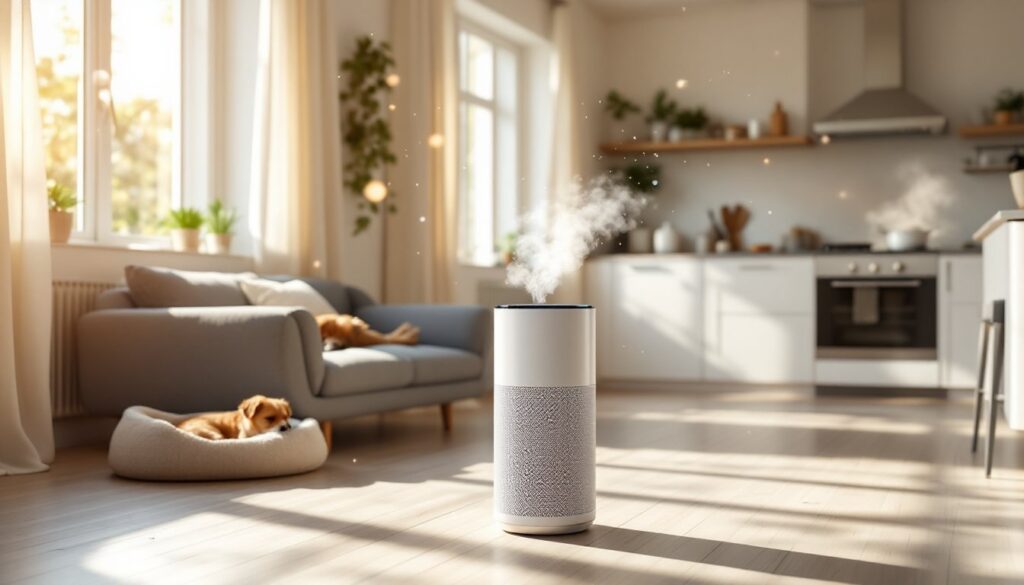
Air purifiers don’t eliminate odors the way a room-service air freshener masks them. Instead, they work by drawing air through the unit and trapping odor-causing particles and gases on or in filter media. The process depends on the filter type, some capture solid particles (like dust from pet bedding), while others adsorb volatile organic compounds (VOCs) and gaseous odors. When air passes through a standard HEPA filter alone, it removes particulates but leaves many odor molecules untouched. That’s why a unit designed to neutralize kitchen or bathroom smells typically needs an activated carbon layer as part of its filtration system. The carbon acts like a sponge for odor molecules, pulling them out of the air stream before returning clean air to the room. Does a air purifier help with smell? Yes, if it has the right filter media. The faster and more efficiently air cycles through the purifier, the more times odor molecules get a chance to be trapped, but even the best units have limits based on room size and odor intensity.
Types of Air Purifier Filters for Odor Removal
Activated Carbon Filters
Activated carbon is the gold standard for odor removal in air purifiers. This material is charcoal that’s been treated to create a porous structure with millions of tiny spaces that adsorb (not absorb, the key difference is that molecules bind to the surface rather than soaking in) odor molecules. Activated carbon filters work especially well on cooking smells, pet odors, smoke, and bathroom smells. A typical air purifier meant for odor control includes a pre-filter (to catch larger particles), a carbon layer, and sometimes a HEPA filter downstream. The downside: activated carbon filters gradually saturate and lose effectiveness, most last 3 to 6 months depending on odor load and air purifier usage frequency. They’re also not rechargeable, so replacement is ongoing.
HEPA Filters and Odor Control
HEPA filters (high-efficiency particulate air) excel at trapping tiny particles but don’t handle gaseous odors on their own. But, they play a supporting role in odor control by removing dust, pet dander, and particulates that often carry or contribute to smells. A unit combining HEPA with activated carbon is more effective than either filter type alone. Some newer models layer activated carbon before the HEPA stage to pre-treat air. Will an air purifier help with smells? A HEPA-only model will have limited success, but pairing HEPA with carbon significantly improves results. Check product specs carefully, if the filter description doesn’t mention activated carbon or odor removal, don’t expect it to handle strong smells.
What Smells Air Purifiers Can and Cannot Eliminate
Air purifiers handle some household odors remarkably well and struggle with others. Smells they handle well include pet odors, cooking smells, smoke, musty basement scents, and bathroom odors, essentially any smell caused by volatile organic compounds or particle-heavy sources. A unit running in a kitchen during cooking or in a bedroom with pet beds will noticeably reduce these odors within hours. Smells they struggle with include very strong chemical odors (like fresh paint or new flooring off-gassing), certain industrial smells, and odors embedded deep in furniture or walls. An air purifier can’t “clean” a couch that’s absorbed smoke for ten years, it can only freshen the air around it. Also, if an odor source is active and ongoing (like a backed-up drain), the purifier becomes a temporary band-aid rather than a solution. The underlying problem needs fixing. Does air purifier help with smell from a specific source? It depends on whether the odor is airborne, particle-based, or structural. If it’s floating in the air, an air purifier will help. If it’s coming from inside materials or from a physical problem (moisture, decay), the purifier alone won’t solve it.
Factors That Determine Air Purifier Effectiveness for Odors
Several variables decide whether an air purifier will actually reduce odors in a given space. Room size and air changes per hour (ACH) matter enormously. A small air purifier in a large room will struggle: manufacturers typically specify the square footage they’re rated for. Most experts recommend an air purifier that cycles the room’s air at least 4–5 times per hour for odor control. Filter quality and freshness are non-negotiable. A purifier with a clogged or expired activated carbon filter won’t help with smell, it’ll just push stale air around. Many homeowners forget to replace filters and then wonder why their unit stopped working. Air purifier placement affects performance too. Units work best when positioned centrally in a room or near the odor source (not in a corner where air circulation is blocked). Odor intensity sets realistic expectations. A mild smell from occasional cooking might clear in an hour with a good purifier: strong pet odors in a small apartment may take days or even weeks of continuous operation to noticeably improve. Finally, air tightness of the space matters, a room with gaps under doors or old windows will struggle to maintain clean air even with a running purifier. Seal major air leaks first, then run the purifier to lock in the improvement.
Conclusion
Air purifiers with activated carbon filters do help with smell, they’re not marketing fluff for homeowners dealing with persistent odors. The key is choosing a unit with the right filter type (carbon, not just HEPA), sizing it for the room, keeping filters fresh, and understanding which smells respond best (airborne odors from cooking, pets, and smoke) versus those that don’t (embedded smells, active odor sources like drains). Will an air purifier help with smells in your home? Yes, if you match the tool to the job. Start by identifying whether your odor problem is airborne and ongoing, then select a purifier rated for your room size with proven activated carbon filtration. Treat it like any other home maintenance tool: replace filters on schedule and don’t expect it to fix structural problems, but for freshening air and knocking down everyday household odors, a quality unit delivers real results.