Table of Contents
ToggleConstruction safety management is a critical aspect of fuel storage facility projects because these developments involve hazardous materials, heavy machinery, complex engineering processes, and high-risk construction activities. Unlike conventional construction projects, fuel storage facilities require strict adherence to safety standards due to the potential risks associated with flammable liquids, fire, explosions, and environmental contamination. Effective safety management protects workers, nearby communities, project assets, and the environment while ensuring compliance with national and international regulations. A well-planned safety management system not only reduces workplace accidents but also improves productivity, minimizes project delays, and enhances the overall quality of construction.
Understanding Safety Risks in Fuel Storage Facility Construction
Fuel storage facility construction presents numerous hazards throughout every stage of the project lifecycle. During site preparation, workers face risks from excavation activities, unstable ground conditions, heavy earthmoving equipment, and underground utility services. As construction progresses, additional hazards emerge during foundation works, steel fabrication, lifting operations, welding, piping installation, electrical works, and commissioning activities. Each task introduces specific occupational risks that require appropriate planning and control measures. Because these projects often involve multiple contractors working simultaneously, effective coordination and communication are essential to prevent accidents arising from conflicting work activities.
Hazard Identification and Risk Assessment
The foundation of every successful construction safety management system is hazard identification and risk assessment. Before construction begins, project managers and safety professionals conduct detailed evaluations of all planned activities to identify potential dangers and determine the level of risk associated with each task. Risk assessments consider factors such as working at heights, confined spaces, crane operations, hot work, hazardous substances, weather conditions, and equipment movement. Once hazards have been identified, suitable control measures are implemented using the hierarchy of controls, which prioritizes hazard elimination, substitution, engineering controls, administrative controls, and personal protective equipment. Continuous risk assessment throughout the project ensures that new hazards are identified as construction activities evolve.
Construction Safety Planning and Management
Every fuel storage facility project should operate under a comprehensive Construction Safety Management Plan (CSMP). This document establishes the project’s safety objectives, defines responsibilities, outlines emergency response procedures, specifies inspection schedules, and provides safe work methods for high-risk activities. The plan also includes permit-to-work systems, incident reporting procedures, contractor management requirements, and regular safety meetings. Effective planning ensures that safety is integrated into every stage of project execution rather than treated as a separate activity. Strong leadership commitment and clear communication of safety expectations contribute significantly to achieving a positive safety culture on construction sites.
Worker Training and Safety Awareness
Training is one of the most effective methods of preventing workplace accidents. Every worker entering a fuel storage construction site should receive comprehensive safety induction training before commencing work. The training should cover site rules, emergency evacuation procedures, hazard recognition, proper use of personal protective equipment (PPE), and reporting procedures for unsafe conditions. Workers involved in specialized tasks such as crane operations, welding, electrical installations, and confined space entry should receive additional competency-based training relevant to their responsibilities. Regular toolbox talks, refresher courses, and safety campaigns reinforce safe work practices and encourage workers to actively participate in hazard identification and accident prevention.
Safe Construction Practices During Above Ground Fuel Tank Installation
One of the most critical phases of a fuel storage facility project is above ground fuel tank installation, where large steel structures, heavy lifting equipment, welding operations, and work at elevated heights create multiple safety hazards that require strict supervision and compliance with approved safety procedures. Crane lifting operations must follow detailed lifting plans prepared by qualified personnel, while all lifting equipment should undergo routine inspection and certification. Workers assembling tank shells and roofs should use approved scaffolding, fall protection systems, and secure access platforms. Hot work activities such as welding and grinding must be controlled through permit-to-work systems that eliminate ignition risks and ensure adequate fire protection measures are in place. Careful planning and supervision during this phase significantly reduce the likelihood of serious accidents and structural failures.
Fire Prevention and Emergency Preparedness
Fire safety is one of the highest priorities during fuel storage facility construction because many construction activities involve ignition sources such as welding, cutting, electrical equipment, and fuel-powered machinery. Fire prevention begins with effective housekeeping, proper storage of combustible materials, and strict control of hot work activities. Fire extinguishers, hydrants, spill response equipment, and emergency communication systems should be readily available throughout the construction site. Workers should participate in regular emergency drills to ensure they understand evacuation procedures, emergency assembly points, and their responsibilities during fire incidents. A well-prepared emergency response plan can significantly reduce injuries and property damage if an incident occurs.
Personal Protective Equipment and Safe Work Practices
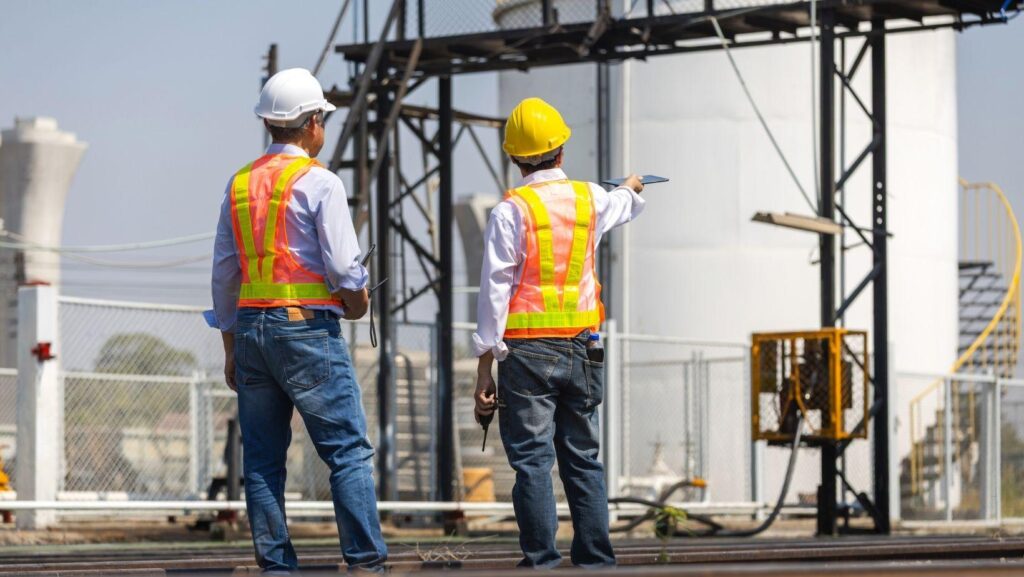
Personal protective equipment serves as the final barrier between workers and workplace hazards. Depending on the nature of construction activities, workers should wear hard hats, safety boots, gloves, eye protection, hearing protection, high-visibility clothing, respiratory protection, and fall arrest systems. PPE should comply with recognized safety standards and be regularly inspected for damage or wear before use. However, personal protective equipment should never replace engineering controls or safe work procedures. Instead, it should complement other hazard control measures to provide comprehensive protection against workplace risks. Supervisors should continuously monitor PPE compliance to ensure that workers maintain safe practices throughout the project.
Environmental Protection and Site Safety
Construction safety management extends beyond protecting workers to include safeguarding the surrounding environment. Fuel storage facility projects must implement measures that prevent soil contamination, groundwater pollution, and surface water contamination resulting from accidental fuel spills, oil leaks, or improper waste disposal. Secondary containment systems, erosion control measures, spill response plans, and proper waste management practices help minimize environmental impacts while maintaining regulatory compliance. Good housekeeping also contributes to a safer workplace by reducing slip, trip, and fire hazards associated with cluttered work areas.
Safety Monitoring, Inspections, and Continuous Improvement
Continuous monitoring is essential for maintaining high safety standards throughout construction. Routine inspections conducted by safety officers and supervisors help identify unsafe conditions before they lead to accidents. Safety audits, behavioral observations, equipment inspections, and near-miss reporting systems provide valuable information that can be used to improve project safety performance. Key performance indicators such as lost-time injury frequency rates, corrective action completion rates, and safety training participation allow project managers to measure the effectiveness of safety programs. Lessons learned from completed projects should be documented and incorporated into future construction planning to support continuous improvement.
Construction safety management during fuel storage facility projects is fundamental to protecting workers, equipment, infrastructure, and the environment. The hazardous nature of fuel storage construction demands a proactive approach that integrates hazard identification, risk assessment, worker training, fire prevention, emergency preparedness, environmental protection, and continuous monitoring into every phase of the project. Strong leadership, effective communication, and strict compliance with safety regulations create a positive safety culture that reduces accidents and improves project performance. By making safety a core project objective rather than simply a regulatory requirement, construction organizations can deliver fuel storage facilities that meet quality, cost, schedule, and safety expectations while ensuring long-term operational success.