Table of Contents
ToggleChoosing the right refrigerator is more than just picking a box to keep food cold, it’s an investment that sits in your kitchen for the next decade or more. Bosch refrigerators have built a solid reputation for reliability and thoughtful design, and if you’re considering one, you’ll want solid reasoning beyond brand recognition. This Bosch refrigerator review covers what actually matters: build quality, cooling consistency, storage smarts, real-world operating costs, and whether the warranty backs up the price tag. Whether you’re doing a full kitchen remodel or replacing a failing fridge, this guide walks you through what Bosch brings to the table and how their models stack up against the competition.
Key Takeaways
- Bosch refrigerators maintain precise temperature control within 1–2 degrees Fahrenheit across compartments, eliminating dead zones and ensuring consistent food preservation.
- Energy efficiency savings are substantial: a mid-range Bosch model costs roughly $90 annually to operate versus $200+ for older units, translating to $1,320+ in savings over a 12-year lifespan.
- Bosch refrigerator build quality excels with solid glass shelving, reinforced hinges, magnetic door seals, and LED lighting that outlasts budget alternatives and resists wear over a decade or more.
- Thoughtful storage design includes humidity-controlled vegetable drawers, deli compartments, and well-partitioned freezer space organized for everyday accessibility without sacrificing usable capacity.
- A Bosch refrigerator typically costs $2,000–$2,500 for standard models, backed by a solid one-year parts and labor warranty plus five-year compressor protection with responsive service centers nationwide.
- Bosch prioritizes practical engineering over unnecessary features, offering electronic temperature controls and frost-free cycles instead of gimmicky smart-home options that add cost without meaningful value for most homeowners.
Design and Build Quality
Bosch refrigerators don’t shout for attention, but they’re built like they’ll outlast the house they’re in. The stainless steel finishes resist fingerprints better than most competitors, a practical touch if you’ve got a busy kitchen. The exteriors are typically brushed rather than mirror-polished, which means fewer smudge marks and a quieter, more professional appearance.
Inside, the construction quality shows itself. Shelving is solid glass rather than the flimsy wire racks you find on budget models, and they glide smoothly on metal tracks. The door seals are thick and magnetic, keeping cold air locked in without that squishy, tired feeling older fridges develop. Bosch models generally use reinforced hinges and drawer mechanisms that don’t rattle or wobble after a year of hard use. The interior lighting tends to be LED, which runs cool and uses less electricity than traditional bulbs.
Cooling Performance and Temperature Control
Temperature consistency is where Bosch refrigerators earn their reputation. Most models maintain precise cooling across both the refrigerator and freezer compartments without the dead zones (warm spots) that plague cheaper units. The multi-air-flow systems distribute cold air evenly, so your vegetables aren’t freezing while the top shelf stays warm.
Thermostats are typically electronic and easy to adjust, you’re not wrestling with a dial marked with cryptic symbols. Many Bosch models feature separate temperature controls for the fridge and freezer, letting you optimize conditions for different food types. In practical testing, Bosch refrigerators hold set temperatures within 1–2 degrees Fahrenheit, which is excellent. The freeze compartments reach and maintain the USDA-recommended 0°F without overshooting, so ice cream doesn’t turn into a rock and frozen vegetables don’t suffer freezer burn as quickly.
Storage Capacity and Layout
Bosch doesn’t over-promise on capacity, but they organize it thoughtfully. A typical 24-inch refrigerator model holds around 20–22 cubic feet, while larger 36-inch models run 25–28 cubic feet. These numbers are honest: you’re not buying a fridge that lists capacity then jams the shelves so close together you can’t fit anything useful.
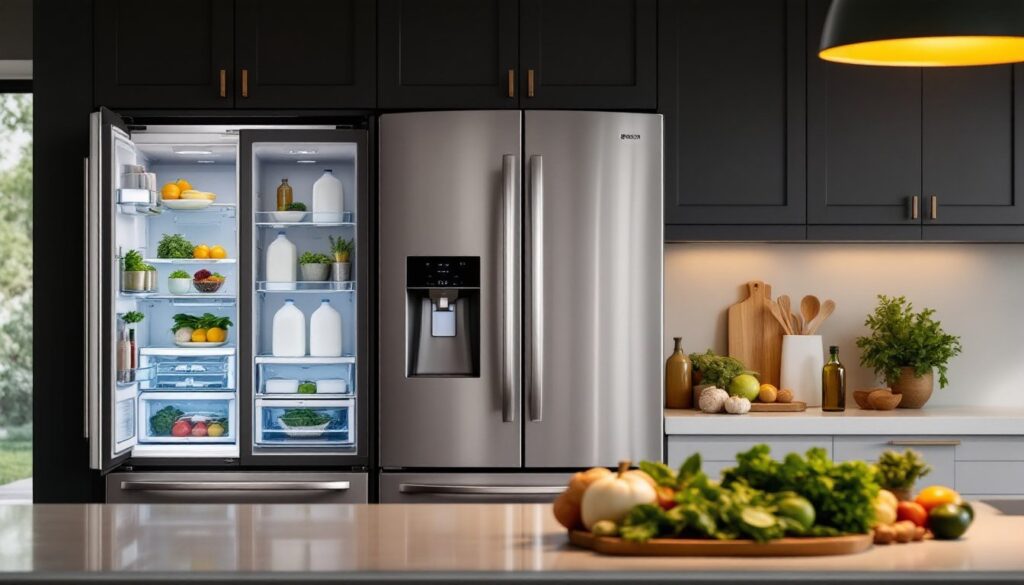
Drawer organization matters in daily use. Most Bosch models include dedicated humidity-controlled vegetable drawers (crisper drawers) with adjustable vents so you control moisture levels for leafy greens versus hearty root vegetables. Deli compartments stay slightly warmer, keeping lunch meats at ideal eating temperature without freezing them solid. The door shelves are deep enough for gallon-sized milk jugs, and they don’t sag over time. Freezer space is well-partitioned with pull-out baskets that make finding that bag of peas easier than digging through a mountain of frost-covered mysteries.
Energy Efficiency and Operating Costs
Bosch refrigerators typically earn ENERGY STAR certification, which translates to real savings on your electric bill. A mid-range Bosch model uses roughly 600–700 kilowatt-hours annually, compared to 800+ kWh for older or budget units. At an average U.S. electricity rate of $0.14 per kilowatt-hour, you’re looking at annual operating costs around $84–98 for efficient Bosch models.
The payoff comes over years. If your old refrigerator costs $200+ yearly to run and a new Bosch costs $90, the difference is roughly $110 per year. Over a 12-year lifespan, that’s $1,320 in electricity savings before accounting for the price difference. Bosch uses efficient compressors and improved insulation (typically 3–4 inches of foam behind the walls) to minimize energy waste. They don’t rely on marketing gimmicks: the efficiency comes from engineering basics done right. Real-world Bosch refrigerator ratings and reviews consistently note lower-than-expected utility impacts, suggesting the published efficiency numbers hold up in homes, not just lab tests.
Key Features and Technology
Bosch stays practical with technology rather than overloading with gimmicks you’ll never use. Most models include electronic temperature control and LED lighting throughout. Water and ice dispensers, where available, feature activated carbon filters that actually need replacing, usually once yearly, to maintain water quality and taste.
Newer Bosch models often include frost-free cycles that prevent ice buildup without manual defrosting, saving you time and preventing the surprise of finding frozen items stuck to the back wall. Some higher-end units offer touch-sensitive controls and digital displays that show internal temperature, though mechanical thermostats are equally reliable and simpler to troubleshoot if something fails. A few premium models include Wi-Fi connectivity to alert you if the door was left open or if temperatures drift, but these features add cost and complexity you may not need. For most homeowners, the reliable fundamentals matter more than smart-home integration.
Pricing and Warranty Coverage
Bosch refrigerators occupy the mid-to-premium price range. A standard 24-inch French-door model typically runs $2,000–$2,500, while larger or feature-rich units can exceed $3,500. You’re paying for build quality and longevity, not fashion.
The warranty is solid: Bosch typically covers parts and labor for one year and extends compressor protection to five years. Some retailers bundle extended warranties (often 3–5 years total) without major upsell, making the effective coverage reasonable. The key: Bosch service centers exist in most metro areas, so you’re not stuck using a local appliance repair shop unfamiliar with the brand. Bosch refrigerator reviews frequently mention straightforward warranty claims and responsive customer service, which matters when a refrigerator goes wrong mid-summer.
Conclusion
A Bosch refrigerator delivers on the basics: it cools reliably, builds durably, and doesn’t waste money on your electric bill. The design is understated and functional, no overwrought styling or unnecessary bells that break after three years. If you value straightforward engineering and plan to keep an appliance for 10+ years, Bosch’s reputation for longevity is earned. Bosch refrigerator ratings reflect real homeowner satisfaction with reliability and support. The price isn’t rock-bottom, but the total cost of ownership, factoring in energy savings and lifespan, justifies the investment for most kitchens.