Table of Contents
ToggleWhen winter arrives and ice builds up on driveways and walkways, homeowners often look for quick solutions. A bag of water softener salt sitting in the garage might seem like a convenient answer, after all, both it and ice melt work with salt, right? The short answer is no. While water softener salt technically melts ice through similar chemistry, it’s far from ideal for this purpose and comes with hidden costs. Before tossing those softener bags onto your driveway, understand what you’re actually working with, why it isn’t designed for outdoor de-icing, and what alternatives will keep your family safer and your property protected.
Key Takeaways
- While water softener salt technically melts ice through freezing-point depression, it contains additives like anti-caking agents not tested for outdoor use and shouldn’t be used on driveways.
- Water softener salt damages concrete faster than purpose-designed ice melt products because its additives accelerate the salt-frost cycle, causing spalling and visible deterioration over multiple winters.
- Using water softener salt on driveways harms landscaping and groundwater by introducing untested mineral fillers and additives into soil and storm drains, potentially violating local environmental ordinances.
- Ice melt products specifically formulated for de-icing work reliably across temperature ranges and are tested for safety around pets, children, and concrete, making them a safer alternative than softener salt.
- Mechanical snow removal with a shovel or sand provides traction without salt damage, and products like calcium magnesium acetate or potassium chloride ice melts offer pet-safe and concrete-friendly options.
- Repurposing water softener salt for outdoor de-icing creates hidden costs in driveway repairs and environmental damage that far exceed the minimal savings of using an unapproved product.
What Is Water Softener Salt And How Does It Work
Water softener salt comes in three main forms: pellets, crystals, and blocks. Most residential water softening systems use sodium chloride (rock salt) or potassium chloride, the same chemical compound found in table salt, just in much larger, less refined granules. When you pour water softener salt into your system’s brine tank, it dissolves into a concentrated salt solution that the resin beads inside your softener use to regenerate and remove hardness minerals like calcium and magnesium.
The salt itself doesn’t directly soften water. Instead, it creates an ion exchange process: hard minerals cling to resin beads, salt ions replace those minerals, and softened water flows to your taps. The purity and grain size of water softener salt matter for efficiency, manufacturers add anti-caking agents, sometimes iodine, and occasionally fillers to improve flow through tanks. That’s the first red flag for using it outdoors. Those additives aren’t designed for pavement or soil contact.
Can Water Softener Salt Actually Melt Ice
Technically, yes, water softener salt can melt ice. The chemistry is straightforward: salt lowers the freezing point of water, a property called freezing-point depression. When salt dissolves on ice, it creates a brine that stays liquid at temperatures well below 32°F. A concentrated salt brine can work down to around 0°F or slightly below, depending on salt concentration. So will water softener salt melt ice? Absolutely. Does that mean you should use it? Not necessarily.
The Chemical Difference Between Water Softener Salt And Ice Melt
The confusion arises because both products contain sodium chloride. Ice melt products, but, are manufactured specifically for outdoor use and come in grades optimized for de-icing: they dissolve quickly, don’t clump in cold or damp conditions, and are formulated to work reliably across a range of temperatures. Water softener salt is not.
Water softener salt contains additives designed to keep it flowing through a closed tank system, not across an exposed driveway. Some softener salts include anti-caking agents like sodium ferrocyanide (also called prussiate of potash), which is safe in small quantities in your water pipes but shouldn’t be spread on surfaces where pets, children, or groundwater might contact it. Ice melt products are specifically tested and approved for these exposures. Also, water softener salt often contains mineral filler, making it less pure and less effective at actual melting. It also tends to clump and cake in slush, creating icy patches rather than clearing them.
Risks Of Using Water Softener Salt On Driveways And Walkways
Using water softener salt for ice melt introduces real problems. The additives mentioned above, anti-caking compounds and mineral fillers, weren’t tested for repeated outdoor exposure or contact with plants and pets. When you spread water softener salt, it doesn’t stay put. Snow melt carries it into soil, storm drains, and groundwater.
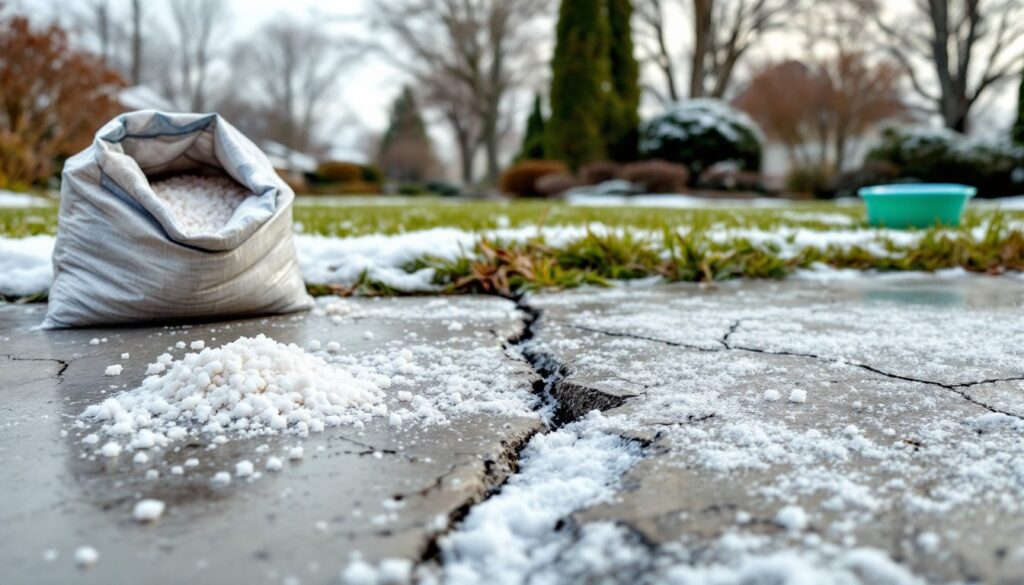
Water softener salt can also damage concrete faster than standard ice melt. Rock salt is corrosive, but standard ice melt products are formulated to minimize concrete damage. The additives in softener salt can accelerate the salt-frost cycle: water enters concrete’s pores, salt residue hardens, freeze-thaw expands that residue, and micro-cracks form. Over multiple winters, your driveway surface spalls and deteriorates visibly.
Metallic contamination is another concern. Some water softener salts contain trace iron or other minerals that can stain concrete or trigger rust bloom on metal fixtures nearby. And if you use softener salt near plants or landscaping, the high salinity will dehydrate root systems and kill vegetation over time, water softener salt isn’t designed for selective use.
Environmental And Landscaping Concerns
Spreading water softener salt on your driveway has downstream effects. Runoff enters storm drains and eventually surface water, raising salinity in local ecosystems and harming aquatic life. Municipalities increasingly restrict road salt use: using an unapproved product like water softener salt on private property can still contribute to this problem and, in some areas, may violate local ordinances.
For landscaping, the damage is direct and visible. Salt damages shrubs, grass borders, and perennials. Lawn edges near driveways treated with water softener salt often brown and die by spring. If you apply softener salt near tree roots (even several feet from the trunk), you risk root death and tree failure down the line. The mineral content and additives in softener salt make it especially problematic for sensitive plants.
Better Alternatives For Melting Ice Safely
Instead of water softener salt, invest in actual ice melt or rock salt products designed and tested for outdoor use. Standard rock salt (rock salt for de-icing, not water softening) is inexpensive and effective down to about 15°F. Calcium chloride and magnesium chloride ice melts work at lower temperatures (down to -25°F and -13°F respectively) and are less damaging to concrete than sodium chloride.
If you want the safest option for concrete, pets, and landscaping, calcium magnesium acetate (CMA) or potassium chloride ice melt products are gentler, though they cost more. Many pet-safe ice melt brands use these compounds. For driveways, read the label: it should say “safe for concrete” and specify the lowest temperature at which it’s effective.
Mechanical removal is always an option. A shovel or snow blower clears ice before it becomes a hazard, and you avoid chemical damage entirely. For walkways and decks, this is often the best choice. Sand, kitty litter, and sawdust provide traction without salt damage, they won’t melt ice, but they reduce slip hazards while you clear snow mechanically.
If you have a water softener at home, keep softener salt exclusively for that purpose. Store it indoors or in a covered area to prevent weather damage, and never be tempted to repurpose it for outdoor de-icing. The cost savings aren’t worth concrete deterioration, environmental impact, or landscaping damage.
Conclusion
Water softener salt will melt ice, that’s chemistry, not opinion. But just because it can doesn’t mean it should. Softener salt contains additives not tested for outdoor use, clumps in snow conditions, damages concrete faster than designed ice melts, and harms landscaping and groundwater. A few dollars saved upfront costs hundreds in driveway repairs and environmental damage later. Grab actual ice melt or rock salt designed for driveways, or stick with a shovel. Your driveway, lawn, and local waterways will thank you.