Table of Contents
ToggleTall kitchen cabinets are the unsung heroes of kitchen storage. They reach toward the ceiling, some extending eight feet or more, and unlock square footage that most homeowners ignore. Whether installing new units, replacing outdated ones, or planning a kitchen remodel, understanding tall cabinet options helps maximize vertical space and streamline workflow. This guide walks through types, design choices, organization strategies, and installation realities so you can make informed decisions before breaking out the drill.
Key Takeaways
- Tall kitchen cabinets extend 84–96 inches high and unlock vertical storage space without consuming counter real estate, making them ideal for small kitchens and homeowners seeking minimalist countertops.
- Pantry cabinets cost $800–$2,500 per unit and should be paired with proper floor leveling and wall plumbing, while wall-mounted units require fastening directly to studs with lag screws to safely support 200+ pounds.
- Design consistency matters—match tall cabinet finishes to base units and islands using the same wood species and stain to avoid a fragmented appearance.
- Organize tall cabinets into functional zones with heavy daily-use items on lower shelves, glassware in the middle, and seasonal or lightweight décor on upper shelves using adjustable shelving in 1-inch increments.
- Door-mounted storage (spice racks, organizers, narrow shelves) multiplies capacity and keeps frequently used items accessible without consuming internal shelf space.
- Semicustom and custom cabinetry offers better long-term value than budget options, resisting warping and holding fasteners more securely to prevent shelf sag over time.
What Are Tall Kitchen Cabinets and Why They Matter
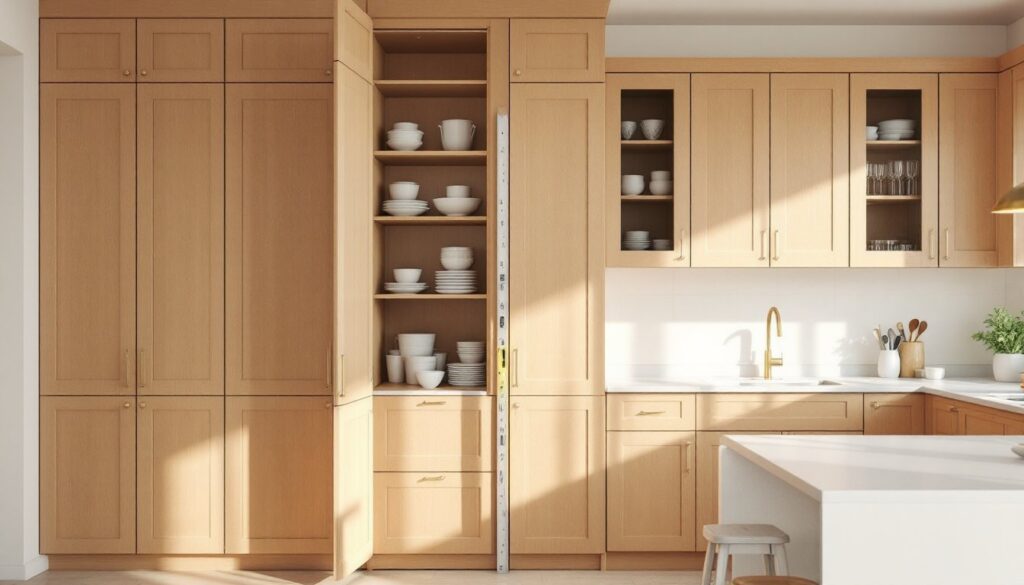
Tall kitchen cabinets are floor-to-wall units that capitalize on vertical storage space, typically standing 84 to 96 inches high (compared to standard base cabinets at 36 inches). In kitchens where floor space is premium or storage demand is high, tall cabinets provide a practical solution without consuming counter real estate.
They serve distinct purposes: pantry cabinets store bulk dry goods, wall-mounted units hold dishes and everyday items, and specialty tall cabinets house appliances like built-in ovens or refrigerators. For homeowners with growing families, small kitchens, or a preference for minimalist countertops, tall cabinets shift the visual weight upward and create clean sightlines.
The real advantage is utilization. A wall that might otherwise hold a 36-inch base cabinet with 18 inches of wall cabinet above it now becomes a unified storage column. That means more pasta, more plates, more breathing room below, a smart trade-off in any kitchen.
Types of Tall Kitchen Cabinets
Floor-to-Ceiling Pantry Cabinets
Pantry cabinets run from floor to ceiling or just below soffit level, usually 24 inches deep (matching base cabinet depth). Most homeowners choose the 24-inch-deep option because it aligns with kitchen workflow and prevents them from jutting awkwardly into the space.
These units anchor one end of the kitchen, typically near the entry, kitchen island, or against an exterior wall, and serve as the household pantry. They include adjustable shelves (usually 1-inch increments) and can accommodate pull-out baskets, spice racks, or door-mounted organizers. Building codes don’t typically regulate pantry cabinets like structural walls, but ensure the floor is level and the wall is plumb before installation.
Cost runs $800 to $2,500 per unit depending on material (melamine, MDF with veneer, or solid wood) and finish. Pre-fabricated options are faster and cheaper: custom builds offer precise sizing and finishing but take longer.
Wall-Mounted Tall Cabinets
Wall-mounted tall cabinets (also called tall uppers) hang directly on studs or French cleats and reach 84 to 96 inches. They’re shallower than pantries, typically 12 to 15 inches, and sit above the counter or open shelving. Load limits matter here: a 48-inch-wide tall wall cabinet loaded with dishes and glassware can exceed 200 pounds, so proper fastening is essential.
Wall-mounted units require clear stud identification using a stud finder. Mark studs before wall prep, then use lag screws or cabinet-grade fasteners that grip studs, never rely on drywall anchors alone for a tall cabinet. If studs don’t align with cabinet openings, install a horizontal ledger board across studs to distribute weight. These cabinets suit smaller kitchens where floor space is tight and visual openness matters.
Design and Style Considerations
Tall cabinets dominate vertical space, so design choices affect the entire room’s aesthetic. Flush-mount (slab) cabinet doors with minimal hardware create clean, contemporary lines: frame-and-panel doors suit traditional or transitional kitchens.
Finish consistency matters. Match tall cabinets to base units and islands using the same wood species, stain, or paint color. Mismatched finishes feel fragmented and cheapen the overall appearance. If the kitchen has warm maple tones, don’t introduce cool white lacquer in the tall units.
Cabinet height can optionally stop 12 to 18 inches below the ceiling if the soffit is uneven or if you prefer a less imposing look. This breathing room softens the visual impact and is practical for cleaning. Conversely, floor-to-ceiling designs maximize storage but require drop-down shelves or a step stool for upper access.
Glass door inserts on 20–30% of tall cabinet doors add visual interest and break monotony without sacrificing storage. They showcase dishware or decorative items while keeping glass-prone shelves protected from dust. Position glass-front doors on cabinets at eye level for maximum impact.
Maximizing Storage and Organization
Height doesn’t help if items are disorganized. Smart shelving divides tall cabinets into functional zones: lower shelves for heavy daily-use items (plates, bowls), middle shelves for glassware and serving pieces, and upper shelves for occasional items or lightweight décor.
Adjustable shelving (1-inch or ½-inch increments) is standard and worthwhile, it lets you adapt to changing needs without replacing the cabinet. Shelf dividers, pull-out baskets, and roll-out drawers add functionality and ease access to deep shelves. A pantry cabinet might include:
- Pull-out wire baskets for snacks or canned goods
- Turntables for spice jars or condiments
- Label makers for quick identification
- Under-shelf baskets for small items
For wall-mounted tall cabinets, use vertical zones differently. Reserve eye-level shelves for frequently used dinnerware: upper shelves for seasonal items or serving platters. Lower, harder-to-reach shelves work for heavier items or low-frequency use.
Door storage multiplies capacity. Spice racks, narrow shelves, and hanging organizers mounted on cabinet doors maximize unused space. Pantry cabinets especially benefit from door storage because the door is often the most accessible spot for oils, spices, and condiments.
Installation, Maintenance, and Cost Factors
Installation depends on cabinet type. Pantry cabinets are delivered as complete units and positioned against a wall: legs or a base frame rest on the floor. Before installing, verify the floor is level (use a 4-foot level and shim as needed) and check that the wall is plumb with a 2-foot level held vertically. If the floor slopes more than ½ inch over the cabinet’s width, shim the legs to keep the unit square, this prevents doors from swinging closed or creeping open.
Fasten the cabinet to wall studs using cabinet screws (2.5 to 3 inches) through the cabinet’s back rail. Two screws per stud is standard practice. If studs are spaced 16 inches apart and your cabinet is 24 inches wide, you’ll hit at least one stud: wider units ensure multiple anchor points.
Wall-mounted tall cabinets require stud identification and French cleats (two interlocking boards) or direct lag-screw fastening. A 48-inch tall cabinet needs fasteners every 16 inches horizontally, consult the manufacturer’s installation guide for exact specifications. Never skip this step: a falling cabinet is a safety hazard and potential liability.
Maintenance is straightforward: wipe door and frame fronts with a damp microfiber cloth and mild soap. Avoid excess moisture around hinges and shelves. For stained wood, use a furniture-grade cleaner every few months. Lacquered or painted cabinets need occasional touch-ups, retain paint samples from installation for repairs.
Cost factors include:
- Material (melamine, MDF veneer, solid wood): $800–$2,500 per pantry unit
- Custom sizing: adds 15–30% to cost
- Installation labor: $500–$1,500 depending on complexity and local rates
- Hardware (hinges, soft-close mechanisms): $50–$300 per cabinet
- Permits: rarely required for cabinet installation alone, but check local codes if structural changes occur
Semicustom and custom cabinetry offer better long-term value than particle-board budget options because they resist warping and hold fasteners more securely. Budget-grade pantry cabinets often develop shelf sag within 5 years if heavily loaded.