Table of Contents
ToggleA Bosch dishwasher’s filter system is its unsung hero, catching food debris and protecting the spray arms and pump from damage. Yet many homeowners never touch their filters, assuming modern dishwashers handle everything automatically. They don’t. A clogged or dirty filter forces the dishwasher to work harder, shortening its lifespan and leaving dishes spotted with remnants. The good news: cleaning a Bosch filter takes about five minutes and requires no special tools. Understanding how your filter works and when to service it can mean the difference between sparkling dishes for a decade and a costly repair call. Here’s what every Bosch owner needs to know.
Key Takeaways
- A Bosch dishwasher filter requires manual cleaning every 2–4 weeks to prevent clogs, spotted dishes, and costly repairs—a simple 5-minute task that saves money long-term.
- The two-part filter system (coarse strainer and fine mesh filter) traps food debris to protect the pump and spray arms, but unlike older models, modern Bosch dishwashers don’t self-clean.
- Clean your Bosch dishwasher filter by firmly pulling the basket upward, rinsing under warm water with a soft brush, and reinserting it until it seats flush with the tub bottom.
- Water pooling at the bottom of the tub or cloudy, spotted dishes are the most common signs of a clogged filter that needs immediate cleaning.
- A damaged or warped filter should be replaced with an OEM Bosch replacement ($20–$50) rather than risked, as operating with a broken filter can cause pump damage costing 10 times more to repair.
Understanding Your Bosch Dishwasher Filter System
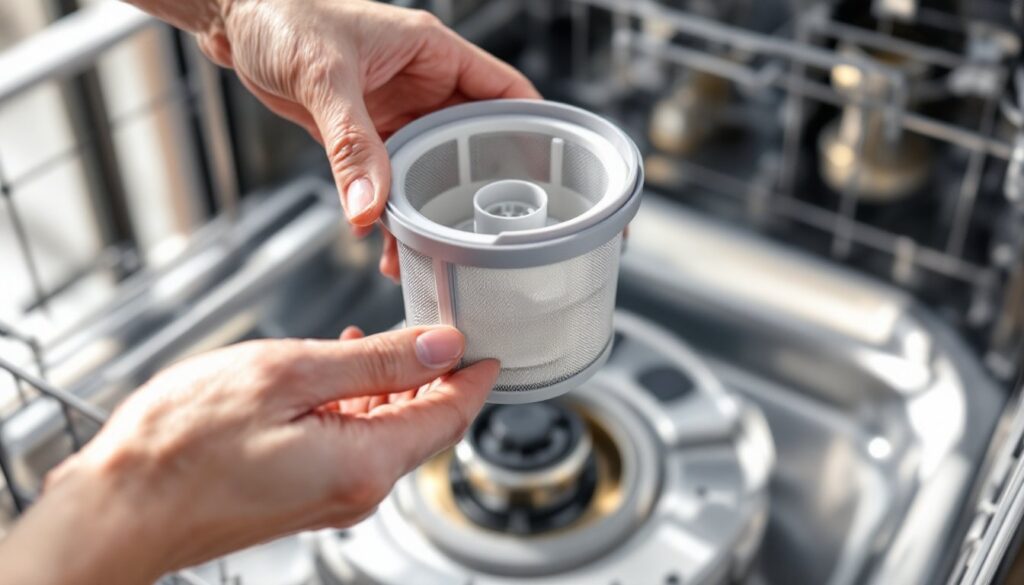
Bosch dishwashers typically feature a two-part filter system: a fine mesh filter and a coarse strainer basket. The coarse strainer sits at the bottom of the tub and catches large food particles, bones, vegetable peels, pasta. The fine mesh filter underneath performs the real work, trapping smaller debris and preventing anything from reaching the pump and spray arms. Together, they act as a barrier between dirty water and your dishwasher’s mechanical components.
Unlike some older dishwashers with self-cleaning filters, most modern Bosch models require manual maintenance. The filter doesn’t get better on its own: it just fills up. Think of it like your home’s furnace filter, when it’s clogged, efficiency drops and your system suffers. The exact filter design varies slightly between Bosch model lines (300, 500, 800 series), but the cleaning principle remains the same. Check your manual to confirm your model’s specific filter layout, as some units have slightly different access or configuration. Most filters are located directly beneath the spray arms at the bottom center of the tub.
How Often Should You Clean Your Filter?
The answer depends on your household’s dishwashing habits. If you run the dishwasher once or twice daily with a typical American diet, clean the filter every two to four weeks. Families with young children or those who pre-rinse heavily should stretch it to monthly. Heavy users, restaurants or large households, may need weekly cleanings.
A quick visual inspection answers the question better than any schedule. Pop open your dishwasher after a cycle and peek at the filter area. If food particles are visible or the mesh appears discolored, it’s time. Don’t wait until water pools in the bottom of the tub: that’s a sign the filter is severely blocked. One practical trick: mark your calendar on the first of each month as a reminder. Pairing filter cleaning with other home maintenance (thermostat checks, fridge coil cleaning) embeds it into habit rather than leaving it to chance. Running hotter water cycles or washing heavily soiled dishes daily accelerates filter loading, so adjust your schedule accordingly.
Step-by-Step Filter Cleaning Process
Removing the Filter
Start by emptying the dishwasher completely and allowing it to cool for a few minutes if it just finished a cycle. Open the door and locate the filter basket at the bottom center of the tub, directly beneath the spray arms. In most Bosch models, you’ll see a cylindrical or rectangular basket with handles or a grip tab.
Grasp the filter handle firmly and pull straight up with steady pressure. The filter often sticks due to food buildup or a light seal, so don’t be timid, a firm, confident tug beats repeated weak pulls. Once removed, set it on a clean, flat surface near your sink. Some fine particles may have sunk beneath the coarse basket, so before reinstalling the filter, take a paper towel and wipe the bottom of the tub dry. Any debris left behind can affect water drainage and efficiency.
Washing and Rinsing
Hold the coarse strainer basket under warm running water and use your fingers or a soft brush to loosen trapped food. A soft bottle brush or old toothbrush works perfectly, avoid steel wool or scrub pads that can damage the mesh. Rinse thoroughly, turning the basket to address all sides and the fine mesh underneath.
For stubborn buildup, soak the filter in warm water with a drop of dish soap for two to three minutes, then repeat the rinse. If debris clings stubbornly to the mesh, a gentle spray from a sink sprayer dislodges it better than soaking alone. Inspect the entire assembly for any damage: small holes, tears, or warping render the filter ineffective. A compromised filter should be replaced with an OEM Bosch replacement to maintain proper filtration. Once clean and dry, slide the filter straight back down into the housing, ensuring it seats flush with the tub bottom. A slight click or resistance confirms proper installation.
Troubleshooting Common Filter Problems
Water pooling in the bottom of the tub after a cycle screams “clogged filter.” Before assuming the worst, remove and clean the filter as described above. Nine times out of ten, a thorough rinse solves the issue. If water still pools after a clean filter reinstall, check that the filter seated fully and check for debris trapped beneath it, a stray pasta piece or bone fragment can block drainage even if the filter is clean.
Dishes coming out cloudy or spotted even though proper detergent and rinse aid often traces back to poor filtration. Filtered water quality improves and spots vanish once the filter is cleaned. Some owners mistakenly assume spots signal a broken dishwasher when really their filter hasn’t been serviced in months.
If the filter pulls free unusually easily or feels loose when installed, it may be warped or cracked. Over time, exposure to heat and detergent chemicals can degrade plastic. Replacement filters (typically $20–$50 depending on Bosch model) are inexpensive insurance against worse damage. Attempting to operate a dishwasher with a broken filter risks pump damage, which costs ten times more to repair.
Rarely, a filter seems stuck and won’t budge. Never force it, you risk breaking the housing. Try running the dishwasher on a hot cycle for two to three minutes, stop it, and allow it to cool. The heat can loosen mineral deposits or hardened debris. If still stuck, consult your manual or contact Bosch support rather than applying dangerous force. A professional’s time ($100–$200 for a service call) beats replacing internal pump components.
Conclusion
Maintaining your Bosch dishwasher’s filter is maintenance, not repair. A five-minute monthly task prevents costly damage and keeps dishes spotless. Treat filter cleaning like you would a furnace filter or car air filter, routine, essential, and worth the small effort. Your dishwasher will run quieter, drain faster, and last significantly longer.