Ever found yourself in a pickle with your iPhone, staring at a screen that seems to have a mind of its own? Whether it’s acting sluggish or you simply want a fresh start, knowing how to factory reset your iPhone without a computer or password can feel like cracking a secret code. But fear not! It’s easier than finding a needle in a haystack.
Understanding Factory Reset
Factory resetting an iPhone completely erases all personal data and restores the software to its original settings. Users often choose this option to resolve issues like slow performance or software glitches. Performing this action without a computer or password makes the process accessible and straightforward.
Knowing how to factory reset the device can be crucial for various reasons. Firstly, it helps individuals prepare the device for resale or transfer. Secondly, this method can benefit those dealing with persistent issues that standard troubleshooting does not fix.
To initiate a factory reset, navigate to the Settings app. Tap on General, then scroll down to transfer or reset iPhone. Selecting Erase All Content and Settings prompts a final confirmation to ensure users are ready to lose their data. Understanding that this process deletes all information, including apps, music, and photos, is essential.
After confirming, the device will restart, and the Apple logo will appear. The process usually takes a few minutes, depending on the data size. Once it finishes, the iPhone presents the initial setup screen, welcome users back to their device as if it were new.
Being aware of the factory reset implications helps in making an informed decision. Regular backups through iCloud or iTunes allow users to restore data post-reset. Use this knowledge wisely to maintain an optimal performance experience with the iPhone.
Reasons for Factory Resetting Your iPhone
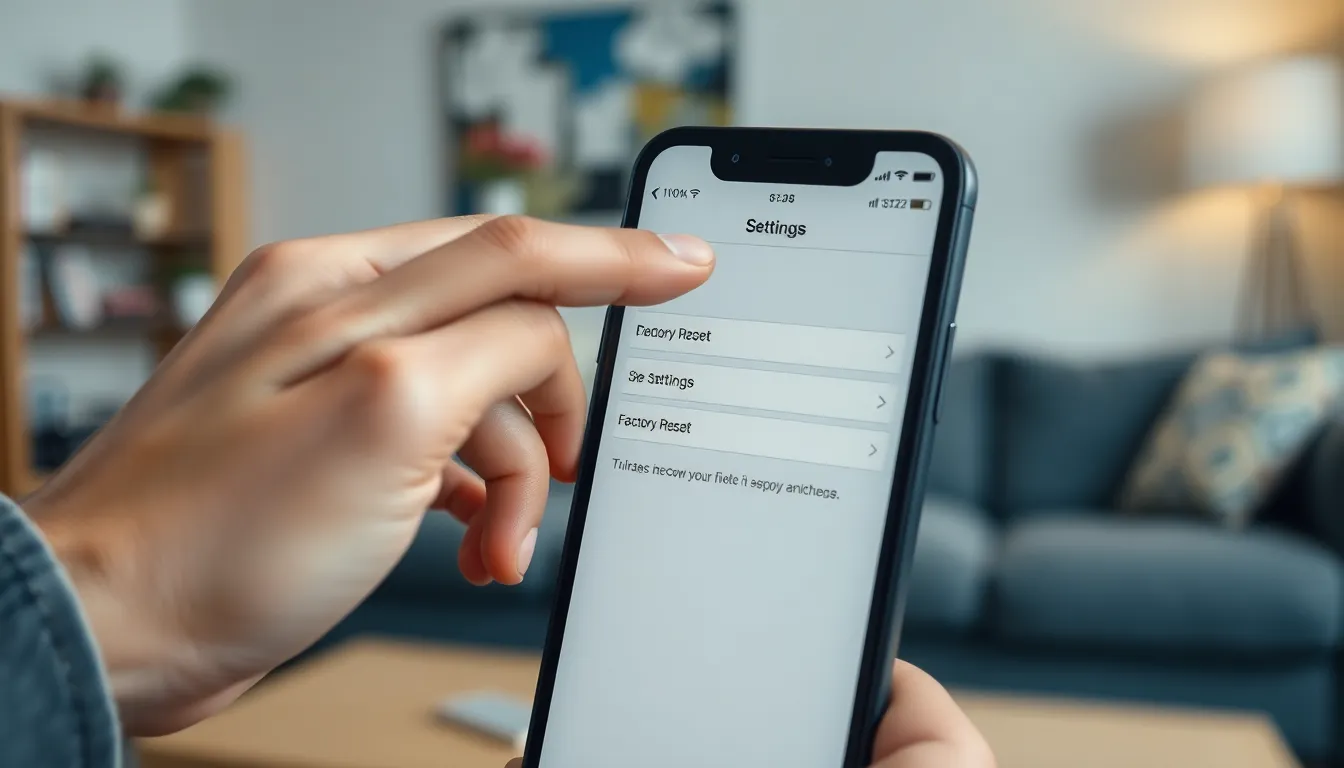
Factory resetting an iPhone often serves specific purposes for users. This process can resolve performance issues and restore original software functionality.
Common Scenarios
Users typically factory reset their iPhones when they encounter persistent software glitches. They may also choose this option before selling or giving away their device, ensuring that personal data remains secure. Additionally, when an iPhone runs slowly or experiences frequent crashes, a factory reset can restore speed and reliability. For others, a reset may resolve connectivity problems related to Wi-Fi or Bluetooth. Ultimately, understanding these scenarios can guide users in deciding when a factory reset is appropriate.
Preparing for a Factory Reset
Preparation ensures a smooth factory reset process. Backing up important data through iCloud or iTunes is crucial, as this preserves vital information like contacts and photos. Users should also ensure their device is charged sufficiently, ideally above 50%, to prevent interruptions during the reset. It’s beneficial to note any essential apps or configurations, as these will be erased in the process. Lastly, users must sign out of iCloud to avoid activation lock issues post-reset. By taking these steps, they can swiftly navigate the reset without losing valuable data.
Steps to Factory Reset iPhone Without Computer or Password
Factory resetting an iPhone can restore its performance without needing a computer or password. Follow these methods to reset your device easily.
Using Settings App
Accessing the Settings app simplifies the process of factory resetting an iPhone. Tap on the Settings icon from the home screen. Scroll down and choose General, then select Transfer or Reset iPhone. Opt for Erase All Content and Settings. This action erases personal data, so ensure important information is backed up. Confirm the reset and wait for the device to restart. After a moment, the iPhone displays the initial setup screen, indicating a successful reset.
Using Recovery Mode
Using recovery mode provides an alternative method when direct access through Settings isn’t possible. Begin by turning off the iPhone completely. Hold the appropriate button combination for your model to enter recovery mode. For iPhone 8 or later, press and quickly release the Volume Up button, then the Volume Down button, and then press and hold the Side button until the recovery mode screen appears. For older models, the button combinations differ slightly. Once in recovery mode, connect to the internet. Choose the option to restore, which resets the device to factory settings. The iPhone will reboot upon completion.
Potential Risks and Considerations
Factory resetting an iPhone without a computer or password carries certain risks. Data loss stands out as a primary concern. Users must recognize that this process completely removes all personal information, including photos, contacts, and apps.
Security implications arise when someone sells or gives away their device. Failing to sign out of iCloud or disable Activation Lock can lead to issues for the next owner. Extra caution is vital during these transactions.
Device performance may not always improve after a reset. If underlying hardware issues exist, they might persist regardless of a fresh start. Users should consider this before making the decision.
Battery life could also be affected. Before initiating a factory reset, ensuring the battery is sufficiently charged is essential. An unexpected shutdown during the process might lead to further complications.
Using recovery mode introduces additional challenges. Users may encounter difficulties entering this mode, particularly if unfamiliar with the button combinations. Understanding the correct procedure significantly eases the process.
Users must know that factory resets can take time. The process generally requires several minutes to complete, depending on the device and the amount of data stored. Patience during this period is crucial.
Backup is another critical factor. Regular backups through iCloud or iTunes prevent loss of important data. Users equipped with backups facilitate an easy recovery after a reset.
Finally, mental preparedness can influence the outcome. Factory resetting is often an emotional decision, especially with sentimental data at stake. Considering these factors ensures a smoother experience.
Factory resetting an iPhone without a computer or password can be a straightforward process when users know the steps involved. This method not only helps in resolving performance issues but also prepares the device for new ownership or a fresh start.
By following the outlined procedures and ensuring all data is backed up beforehand, users can navigate this process with confidence. Understanding the implications of a factory reset is crucial to avoid any unwanted surprises. With the right preparation and knowledge, users can restore their iPhones to optimal performance and enjoy a seamless experience moving forward.